Asma Mahmud Hashmi is a visual artist and printmaker based in Oxfordshire, UK. Born in Pakistan, she studied at the National College of Arts, Lahore, before completing an MFA at the University of Hawaii as an East-West Center Fellow.
Her practice is rooted in printmaking but extends into constructed and stitched paper, installation and mixed media. Through processes of printing, layering, tearing, staining, stitching and reassembling, she explores migration, belonging, inherited memory and the ways personal histories intersect with wider histories of displacement and colonialism.
Materials and processes carry particular significance within her work. Chintz, muslin, Kashmiri embroidery, family archives, maps and repeated patterns become points of departure, while handmade and altered papers, natural pigments and thread allow images to be fragmented, repaired and reconstructed.
Hashmi has taught extensively in Pakistan and the UK. She was formerly Associate Professor at the Indus Valley School of Art and Architecture, Karachi, and currently teaches printmaking and art in Oxford. She also leads workshops for the Ashmolean Museum and is a member of Oxford Printmakers Co-operative and Magdalen Road Studios.
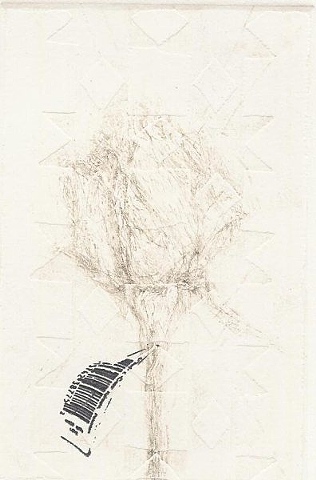
"Perhaps the changing fabric of society, by turning one’s private sentiments, feelings and idea of beauty into a shopping endeavour/adventure concerns the artist, who juxtaposes the roses (made like a product) with the bar code at the bottom of the imagery in several of her works. However Asmaa, with her strong and sensible position on these issues, approach her work in a seductive manner. Both her mixed media prints and digital works delineate the artist’s pleasure in producing these works. Lines drawn on the prints, layers of silk screens and sharp cuts on the etching plates reveal a hand that takes a great delight in mark making. Her lines and even the process of stitching pieces of cloth in the pattern of a quilt, indicate that the artist is fascinated with the possibility and potential of fabricating a world through her tools and medium."
Quddus Mirza 2009